
News
New conference to add to your calendar!
How is AI and machine learning shaping research at Lund University today and where is it headed?¨
Attend the: LU eScience Hub: Research and Development within AI and Machine Learning Conference, for more information click the link.
HRI 2026, Edinburg with Gaye's Reflections- March 16-19, 2026

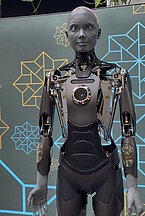
The ACM/IEEE International Conference on Human-Robot Interaction 2026 is a major international conference focused on how humans and robots interact and work together. It brings researchers, engineers, designers and students from fields such as robotics, artificial intelligence, psychology, neuroscience, human-computer interaction and more.
The conference took place in Edinburg from March 16-19, 2026 and the theme “HRI Empowering Society” focuses on how robots can be designed, used to support people in everyday life, including healthcare, education and social environments.
During the conference, participants present their latest research through talks, paper sessions, and poster presentations. Workshops provide opportunities to explore new methods and technologies while live demonstration showcase robots in action across different contexts.
Attending this conference was a really enriching, thought-provoking and enjoyable opportunity. The diversity of workshops, talks and presentations made it especially engaging. It was particularly interesting to see how human-robot interaction is approached from many different perspectives and disciplines. One of the most striking aspects was the variety of robots presented from cute, pet-like robots to more human-like even old-man looking designs and as well as plant-like robots.
At the same time, listening carefully to the presentations and discussion led to some critical reflections. Many presentations included the main take home message is that “using robots can help to solve X problem” or “robots can help/support X group”. It is promising to see that researchers are actively thinking about solutions and ways to support people. Much of the discussion focused on questions like how robots can be integrated into specific settings and how they can be used effectively. These are important questions, especially because both qualitative and quantitative research can help improve designs and applications.
However, I often found myself asking different kinds of questions starting with why. Why do we turn to robots as solutions for supporting cancer patients, children, elderly individuals or people experiencing loneliness? (Why) do we begin by identifying robots as solutions. Why should we first more critically examine the problems themselves?
This reflection is not meant to suggest that researchers ignore the broader issues. On the contrary, many are clearly aware that structural problems such as limitations in healthcare systems, or inequalities related to gender, race, age, and socioeconomic status. Rather the concern is about how these problems are framed. There is value in more explicitly acknowledging that such challenges often stem from systematic gaps, for example insufficient human support in healthcare or social care. I think it is important to be stated by researchers whether and why robots are being positioned as complete solutions or as partial, supportive tools.
Another critical reflection related to how researchers define key concepts in their work. While many presentations offered valuable insights, it was sometimes difficult to clearly understand what certain terms actually meant. This led me to find myself making assumptions about their meanings. For example, when research focuses on autonomy what exactly is meant by autonomy? Or when participants are asked “Would you take care of a robot?” what does “taking care” actually involve? Taking care of robots is not same as taking care of a pet, or a child, yet these distinctions are not always clearly addressed.
These reflections are based on the talks I attended. I am not arguing that researchers did not address these issues. Rather, among nearly 900 valuable attendees, I had opportunity to listen to some who explicitly questioned some problems: (i) why we continue to rely on older definitions, and concepts that may reinforce biases related to race, competence and other social factors when studying today’s human-robot interactions. Others critically discussed whether (ii) robots are truly necessary in certain contexts and examined how they fit broader technological and economic systems, including their place in capitalist structure. There were also important presentations highlighting how (iii) key information is sometimes missing in research articles such as demographic details, ethics approval and clear descriptions of research methods. Also, in poster presentations, I had chance to listen to presentations about why we need robots, how we should design, and train systems to be less biased. Seeing that such approaches already exist and can continue to develop, strengthened my belief that we can further improve our commitment to being present, reflective and transparent in our work.
- Gaye Aşkın
Newsletter 2026 Spring
We're excited to announce that the SITE group will present its work at the launching event of the Lund Humanities Village. Stay tuned as more info will come soon!
Valentina Fantasia is part of two newly-funded WASP-HS research groups: “Child Development in the Age of AI and Social Robots” (Coordinator: Ginevra Castellano, Uppsala University) and “Autonomous Systems and Robotics in Society” (Coordinator: Airi Lampinen, Stockholm University).
This year WASP-HS Graduate School Winter Conference will be hosted at LUX! A dedicated workshop on AI in Higher Education is organised by Valentina Fantasia and Katherine Harrison (LiU). We look forward to have the WASP HS community here to discuss the future of AI in Higher Education, its risks, benefits and challenges!
Related blog post about the WASP-HS Graduate Scool Winter Conference: Doing Research with AI: Changing Academic Practices and Doctoral Training
HRI 2026 in Edinburgh: Gaye Askin will join the conference in presence and Samantha Stedtler will organise a workshop. More news on the conference soon!
Outreach
We (Gaye & Johannes) visited Lund Mondial Montessori Lund School for data collection. In this visit we wanted to understand how children understand robots. We worked with a class of second-grade students and let them draw their own robots, act like robots and talk about what robots are and what they can do. We learned that the children were very creative and imagined robots in fun ways, giving them names. Our project took place in Sydsvenska-Minibladet.
Robotveckan (Robot Week) is an event organized in Lund where schools visit to learn about robots and AI. It is organized by Lund University and is part o a larger European robotics week. During the event students visit robot labs take part in guided tours and see real robots in actions. During the visit, we introduced our robots- EPI- error led by Trond Arild Tjøstheim, Birger Johansson and Christan Balkenius. We also presented our projects on robots’ error led by Samantha Stedtler and on children’s understanding of robots led by Gaye Aşkın and Valentina Fantasia.